roadwise.Open study app

Mississippi driving lesson · School Buses & Pedestrians

Yielding to pedestrians

A 2-minute lesson from the Mississippi course. Read the rules and examples, follow the handbook page references, and check your understanding before you move on.

Read time
2 minutes
Course unit
School Buses & Pedestrians
Checkpoint questions
6
Source pages
59

People on foot have no protection in a crash, so the law puts them first. A person walking across the street within a crosswalk, painted or not, always has the right of way.

Know the rule

A person walking across the street within a crosswalk, whether or not the crosswalk is marked, ALWAYS has the right of way.

Handbook p. 59 ↗

Know the rule

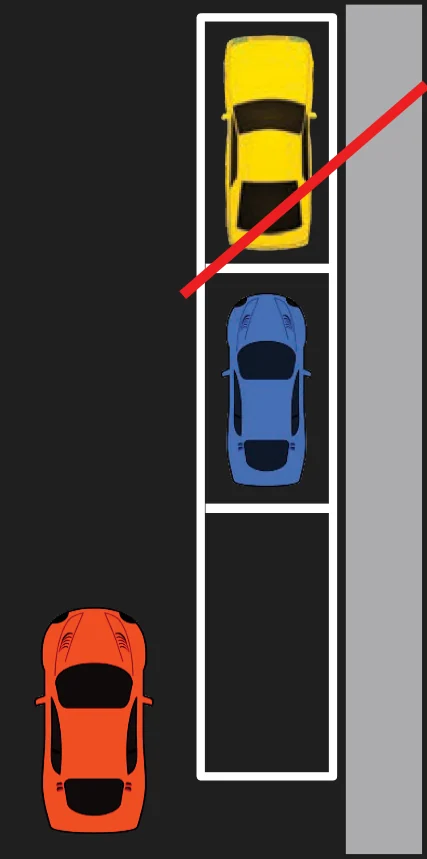
Watch for pedestrians exiting parked cars or walking between parked cars.

Handbook p. 59 ↗
Watch for pedestrians between parked cars diagram
Pedestrians may step out between parked cars

Know the rule

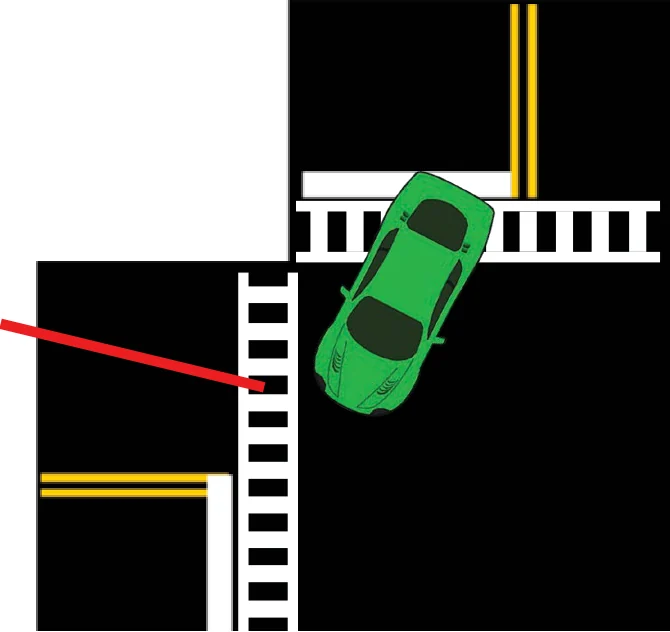
Watch for pedestrians entering crosswalks as you prepare to turn.

Handbook p. 59 ↗
Watch for pedestrians in crosswalk while turning diagram
Check the crosswalk you're turning across

Know the rule

People who are blind or visually impaired may carry a white cane, which may have a red tip. Take every precaution and extend every courtesy at intersections and crosswalks, and come to a complete stop if necessary.

Handbook p. 59 ↗

Know the rule

As a driver, be extremely careful around pedestrians. Always keep your vehicle under control and be prepared to yield to those on foot.

Handbook p. 59 ↗

Know the rule

Yielding the right of way to funeral processions is not required by law, but it is common courtesy.

Handbook p. 59 ↗

Put it into practice

You're turning right on a green light and a man with a white cane steps into the crosswalk you're about to cross. Stop completely and wait until he has fully crossed before you turn.

Check your understanding

Read the question, decide on an answer, then open it to check the explanation. These are Roadwise study questions based on the source handbook.

A pedestrian is crossing the street within a crosswalk that has no painted lines. Who has the right of way?
  1. Whoever arrived first
  2. The driver, since the crosswalk is unmarked
  3. The driver, if traveling under the speed limit
  4. The pedestrian, always

Answer: The pedestrian, always

A pedestrian crossing within a crosswalk always has the right of way, whether or not it's marked.
Handbook p. 59 ↗
What might indicate that a pedestrian has a visual impairment and needs extra caution from drivers?
  1. They are walking slowly
  2. They are wearing headphones
  3. They are carrying a white cane, possibly with a red tip
  4. They are wearing sunglasses

Answer: They are carrying a white cane, possibly with a red tip

A white cane, which may have a red tip, can indicate a pedestrian who is blind or visually impaired.

Handbook p. 59 ↗
Near cars parked along the street, what does the handbook tell you to watch for?
  1. Parking meters that block your view of signs
  2. People getting out of them or walking between them
  3. Parked cars narrowing the lane ahead
  4. Parked cars marking a school bus stop

Answer: People getting out of them or walking between them

Watch for pedestrians exiting parked cars or walking between parked cars.

Handbook p. 59 ↗
According to the handbook, is yielding to a funeral procession legally required?
  1. Yes, at all times
  2. Yes, but only on two-lane roads
  3. Yes, but only within city limits
  4. No; it is common courtesy

Answer: No; it is common courtesy

Yielding to funeral processions is described as common courtesy, although not required by law.

Handbook p. 59 ↗
A pedestrian crossing at a marked crosswalk has the right of way, but one crossing at an unmarked crosswalk does not.
  1. True
  2. False

Answer: False

Pedestrians have the right of way in crosswalks whether marked or unmarked.

Handbook p. 59 ↗
Drivers should be prepared to come to a complete stop if necessary to protect a pedestrian using a white cane.
  1. True
  2. False

Answer: True

Drivers should take every precaution, including stopping completely if necessary, for a pedestrian using a white cane.

Handbook p. 59 ↗
Take the lesson checkpoint in the app

More in School Buses & Pedestrians